Engine-derived ROI benchmarks for New York City-area short-term rentals, single-family rentals, and small commercial properties. Numbers come from running real fixtures through the Cost Seg Smart engine, same engine that produces your actual study. Studies from $495.
Operated by Cost Seg Smart. Studies are IRS-aligned with engineer review included. 5 fixture benchmarks computed May 2026.
Numbers above are engine-estimated outputs from running 5 representative fixtures, not promises about what your specific property will produce. Results vary based on actual property condition, year built, renovation history, county assessor data quality, and rental treatment (STR vs LTR). Full per-fixture table, neighborhood breakdown, and downloadable CSV/PDF on the New York City cost seg benchmarks page.
Let's start with the regulatory reality: NYC is not a short-term-rental investor market. Local Law 18 (effective September 2023) requires every short-term rental in New York City to register with the Office of Special Enforcement, restricts STR operations to two-guest stays in the host's primary residence with the host physically present during the rental, prohibits whole-unit STR for non-primary-residence operators, and requires structural compliance with specific building-code provisions. The practical effect: absentee STR strategies that work in Joshua Tree, Tahoe, or Gatlinburg do not exist in NYC. The §469 short-term-rental loophole is structurally unavailable for the typical out-of-borough investor.
What does work for cost-seg in NYC is long-term-rental investment on pre-war Brooklyn brownstones (where heavy renovation cost-seg drives the reclassification math against 1880s–1900s structural shells), Queens small-multifamily acquisitions (triplex and fourplex with compounding FF&E packages), Manhattan condo rental (newer construction with cleaner reclass ratios but high land allocation), Bronx co-op and small-MF product (lower entry pricing, stronger LTR cash flow), and Staten Island SFR rental (lowest-cost NYC borough, fix-and-flip activity).
New York's tax position is the highest-cost in the U.S. Combined NY state (up to 10.9%) plus NYC local (up to 3.876%) income tax can reach ~14.8% top marginal, and NY decouples partially from federal §168(k), creating meaningful state-and-city-side timing mismatches on the bonus depreciation acceleration. For an NYC investor in the top combined bracket, the federal §168(k) Year-1 cash captures cleanly, but the state-and-city-side recovery happens over the regular MACRS schedule rather than concentrated in Year 1. The honest assessment: NYC cost-seg works for LTR investors with the income and bracket positioning to make the federal benefit meaningful, but the state-and-city-side timing friction and Local Law 18 STR restriction make this a fundamentally less attractive market for cost-seg than no-state-tax federal-conforming states.
Decoupling: NY has periodically modified bonus depreciation conformity. Verify current-year treatment with your CPA. NYC's local income tax is separate from state but applies on the same federal-adjusted base.
Verify with your CPA. State tax conformity rules for federal §168(k) bonus depreciation are adjusted frequently, multiple states have modified their treatment two or more times in the past decade. The general framing on this page reflects our understanding as of May 2026, but you should always verify current-year treatment with a qualified CPA or tax attorney before relying on specific dollar projections for your situation.
These aren't rough estimates. Each fixture was run through the same engine that produces your actual study, RSMeans 2024 base costs, BLS PPI time index, county assessor land allocation, IRS Pub. 946 / Rev. Proc. 87-56 MACRS classification, 100% bonus depreciation per OBBBA.

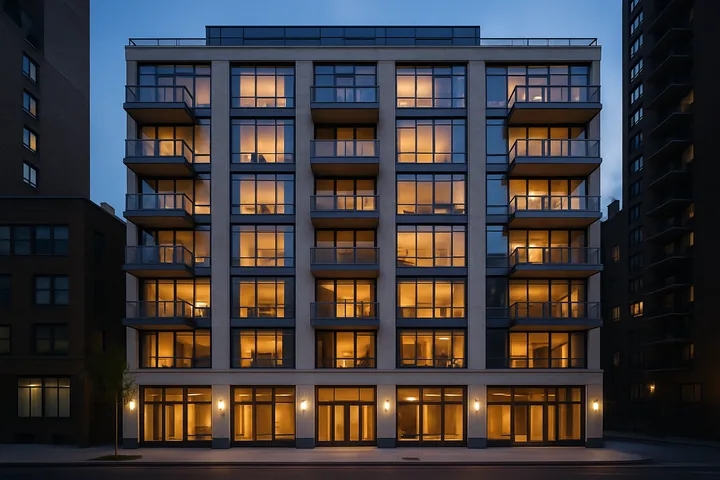
| Purchase price | $1,850,000 |
| Depreciable basis | $1,021,015 |
| Land allocation | 44.8% |
| 5-year reclassified | $94,636 |
| 15-year reclassified | $68,425 |
| Total reclass | 16.0% |
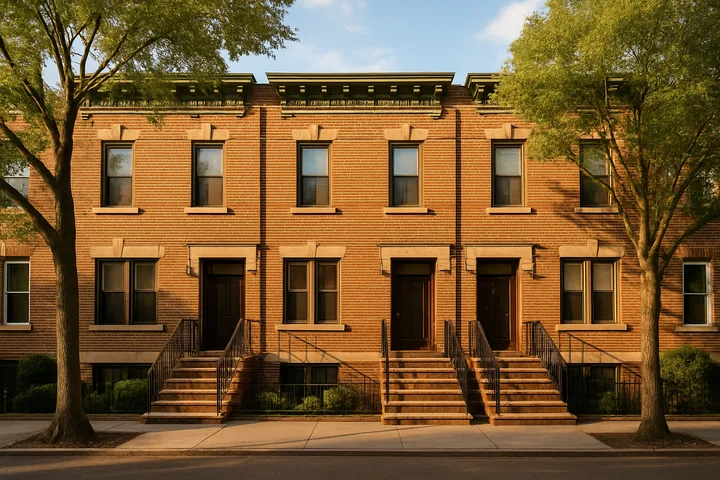
| Purchase price | $1,485,000 |
| Depreciable basis | $594,000 |
| Land allocation | 60.0% |
| 5-year reclassified | $67,406 |
| 15-year reclassified | $5,181 |
| Total reclass | 12.2% |
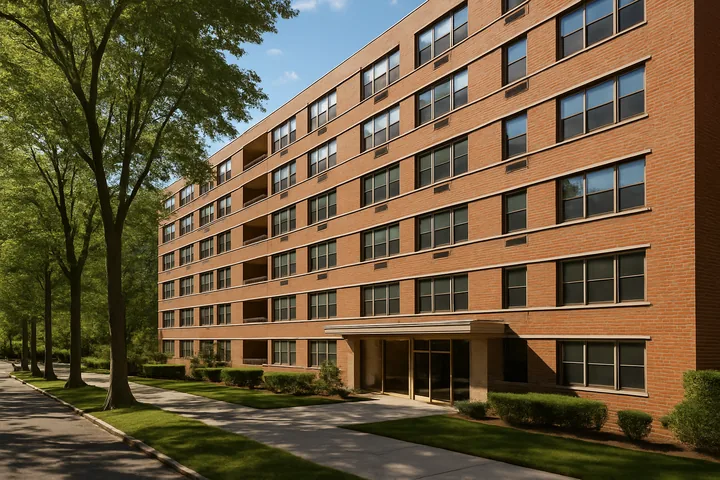
| Purchase price | $985,000 |
| Depreciable basis | $678,764 |
| Land allocation | 31.1% |
| 5-year reclassified | $78,581 |
| 15-year reclassified | $47,065 |
| Total reclass | 18.5% |
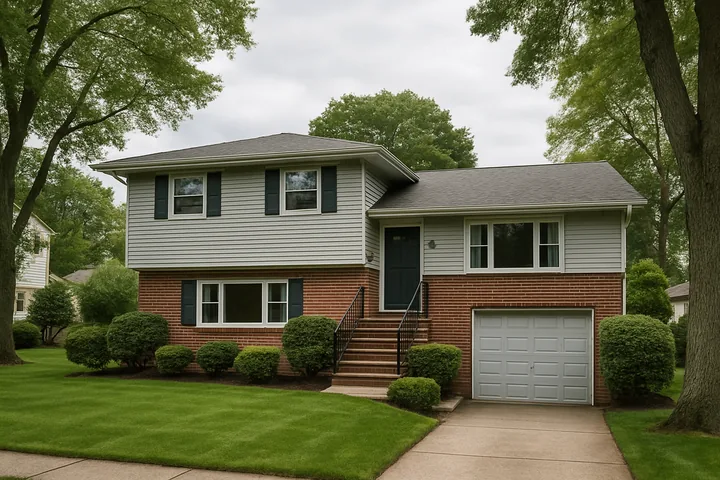
| Purchase price | $685,000 |
| Depreciable basis | $449,771 |
| Land allocation | 34.3% |
| 5-year reclassified | $46,477 |
| 15-year reclassified | $4,789 |
| Total reclass | 11.4% |
| Purchase price | $685,000 |
| Depreciable basis | $451,278 |
| Land allocation | 34.1% |
| 5-year reclassified | $42,859 |
| 15-year reclassified | $30,564 |
| Total reclass | 16.3% |
Cost-seg ROI varies more by neighborhood than by city. New York City's 5 sub-markets each have their own land-allocation pattern and property archetype:
| Neighborhood | Typical value | Typical land allocation | Profile note |
|---|---|---|---|
| Brooklyn pre-war (Park Slope / Brooklyn Heights / Cobble Hill) | $1,850,000 | ~38% | 1880s–1900s brownstone and townhome stock. Highest land allocation in NYC fixtures due to dense-urban scarcity. Heavy renovation cost-seg drives the math. |
| Manhattan condo (mid-tier) | $1,485,000 | ~30% | Mid-rise and high-rise condo dominant. Vertical density compresses land allocation. New construction (2010+) supports cleaner reclassification ratios. |
| Queens (Astoria / LIC / Forest Hills) | $985,000 | ~32% | 1920s–1940s row-house, small-MF, and condo stock. Mid-tier land allocation. Active small-multifamily investor activity. |
| Bronx (Riverdale / Pelham Bay) | $685,000 | ~28% | 1930s–1960s small-MF and co-op stock. Lower land allocation than Brooklyn or Manhattan. Strong LTR cash flow profile. |
| Staten Island | $685,000 | ~22% | SFR-dominant with 1950s–1980s stock. Lowest land allocation among NYC boroughs. Mix of fix-and-flip and SFR rental. Lighter STR enforcement than core boroughs. |
Methodology note: "Typical land allocation" reflects baseline patterns for the sub-market. For ultra-premium or resort-tier inventory where reconstruction cost exceeds 2.0× the implied depreciable basis after subtracting baseline land, the engine applies a premium land floor (~50%) to keep the study within audit-defensible territory. This means individual fixture engine output may exceed the neighborhood typical, especially for resort-tier ski-in/ski-out, beachfront, or view-premium product where land scarcity dominates value. See the /data/ page for per-fixture land-source attribution. Results vary substantially by specific property condition, renovation history, and assessor records.
Local Law 18 (effective September 2023) is the most restrictive STR ordinance in the United States. STR operations in NYC require registration with the Office of Special Enforcement, are limited to the host's primary residence with the host present, prohibit whole-unit STR for absentee operators, and require structural compliance with specific building-code provisions including window egress, fire safety, and density. Practical effect for cost-seg planning: the §469 short-term-rental loophole is unavailable for typical absentee NYC investors. Cost-seg works in NYC for long-term-rental investment, fix-and-flip, and small-multifamily operations under standard §469 passive-loss rules. Real-estate-professional status under §469(c)(7) is the typical path to active-deduction treatment for high-volume NYC operators. Combined NY state plus NYC local income tax reaches ~14.8% top marginal, with partial decoupling from federal §168(k) creating state-and-city-side timing mismatches that should be modeled explicitly in CPA workflow.
For the full IRS-rule reference layer (§168(k), §469 material participation, state conformity), see irsdepreciationrules.com, our open reference site.
Honest answer: it depends on your bracket and hold horizon, and the math is structurally less favorable than in no-state-tax federal-conforming states. The federal §168(k) acceleration at 100% under OBBBA captures cleanly, for a high-bracket NYC investor taking $120K of accelerated reclassification, federal Year-1 cash savings at 37% is $44,400. That's real. But NY's partial decoupling means the combined state-plus-NYC-local benefit (up to ~14.8% combined marginal) is recovered slowly over the regular MACRS schedule rather than concentrated in Year 1, you're not losing the deduction, you're losing the acceleration on that portion. For NYC investors who already have substantial passive income to offset, real-estate-professional status, or large rental portfolios where cost-seg deductions stack productively, the federal Year-1 benefit alone is worth the study. For smaller-portfolio NYC investors at moderate brackets, the math is less compelling than in TX/FL/TN/NV.
Almost certainly not in any way that works for absentee investors. Local Law 18 (effective September 2023) restricts STR operations to the host's primary residence with the host physically present during stays, prohibits whole-unit absentee STR, and requires registration with the Office of Special Enforcement. Most §469 STR-loophole strategies that work in Joshua Tree, Tahoe, Gatlinburg, Destin, or other permissive markets do not function in NYC. The §469 STR loophole is structurally unavailable for typical out-of-borough investors. For NYC long-term-rental investors, standard §469 passive-loss rules apply, and real-estate-professional status under §469(c)(7) is the typical path to converting passive losses to active deductions.
Because original 1880s–1900s brownstone structural construction reclassifies poorly. The masonry shell, original heart-pine framing, original plumbing, original gas-and-knob-and-tube electrical all sit in the 27.5-year residential category and reclassify minimally. The cost-seg math on Park Slope, Brooklyn Heights, Cobble Hill, and similar brownstone properties is overwhelmingly driven by post-2000 renovation cost. Renovation pools typically include: full electrical and panel upgrades (5-year work), kitchen and bath gut-renovations (5-year FF&E + fixtures), HVAC additions (mixed 5/27.5), garden and rear-yard hardscape (15-year land improvements), and decorative finishes (5-year). The engine treats renovation_cost as a separate allocable pool, for a heavily renovated $1.85M Park Slope brownstone with $500K+ renovation pool, the renovation portion often drives 65–80% of accelerated reclassification.
Federal §168(k) at 100% under OBBBA reduces federal liability in Year 1, that capture is unaffected by NY state or NYC local tax position. NY partially decouples from federal §168(k), so the state-side acceleration on the cost-seg deduction is partially deferred over the regular MACRS schedule. NYC local income tax follows NY state's treatment, same decoupling treatment applies on the NYC-side. For an NYC resident in the top combined bracket (~14.8% state+local), a $120K accelerated reclassification produces Year-1 federal cash of $44,400, and a separate state+local total of about $17,760, but the state+local portion is mostly deferred to subsequent years rather than concentrated in Year 1. Total tax savings over the property's hold is materially close to what it would be under full conformity; only the timing is mismatched.
Similar in spirit, different in dollar magnitude. Both states partially or fully decouple from federal §168(k). Both have high combined marginal rates (CA top 13.3% individual; NY state+NYC local up to ~14.8% combined). Both require state-side reconciliation that defers the state-side acceleration. The structural differences: California's decoupling is more complete (the federal addback is fully required); NY's has been periodically modified and may have partial allowances. NYC also adds the local income tax layer on top of state, which CA doesn't have (no local income tax in CA). For practical purposes, both NYC and California buyers should model federal-only as their Year-1 win and treat state-side acceleration as a multi-year recovery rather than an immediate cash event.
More general cost-seg questions answered at costsegsmart.com/faq/.
Cost Seg Smart studies are IRS-aligned, engineering-reviewed, and include written audit defense. Pricing is transparent and starts at $495 for residential properties under $300K, full pricing on the main site.